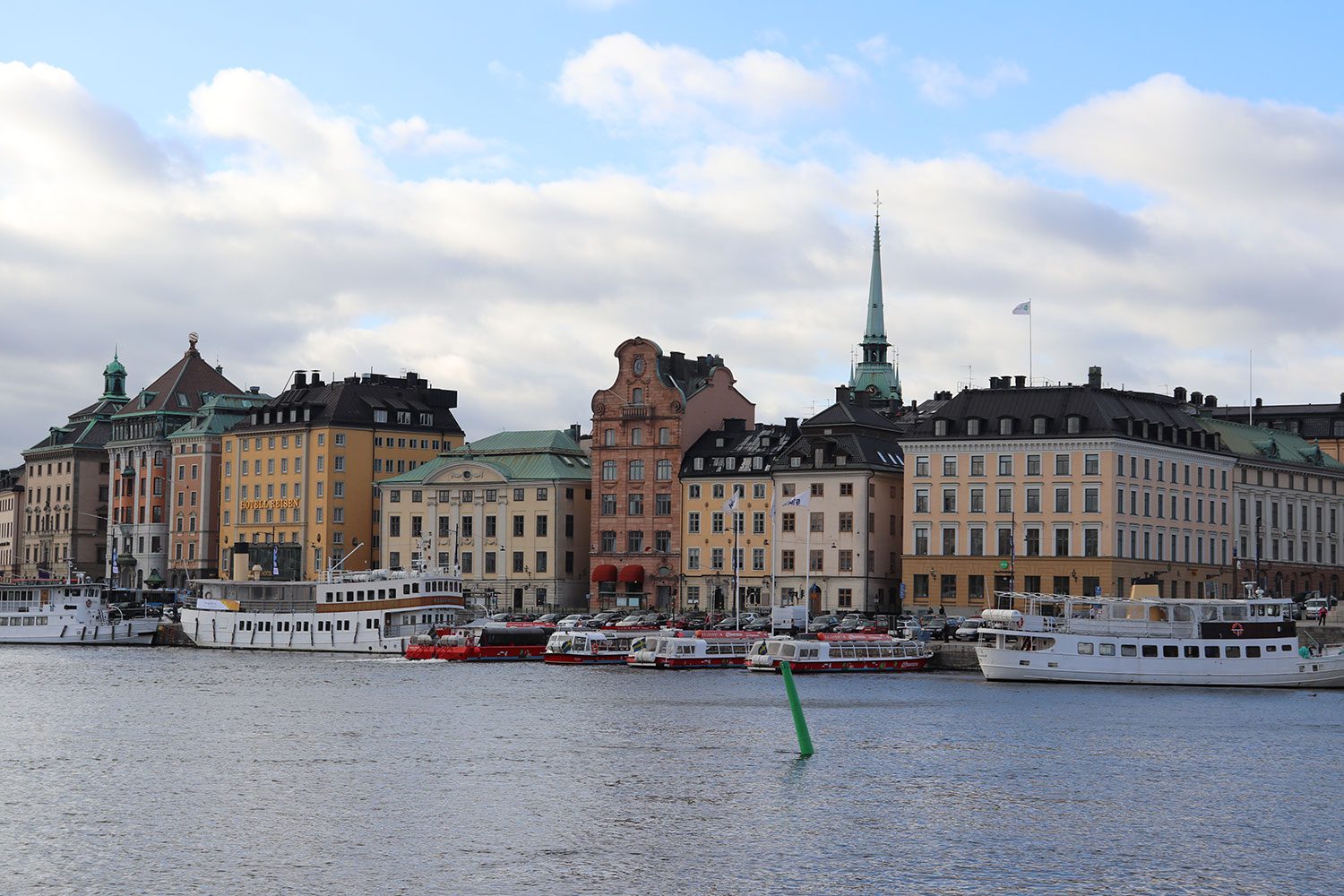
Stockholm has always been high on my bucket list, so I finally decided to visit—and even though my first trip was much shorter than I would have liked, it was absolutely wonderful. I ended up missing the city so much that I went back again. With its rich history, deep Scandinavian roots, and stunning surroundings, Stockholm has easily become one of my favourite cities in the world.
A Short History of Stockholm
The origins of Stockholm are somewhat obscure, even down to the meaning of its name, which roughly translates to “log islet.” During the Viking Age, Sweden’s most important towns were Birka, Sigtuna, and Uppsala—all places you can still visit today.
As defence systems in those towns weakened, a new city was founded in 1252 by regent Birger Jarl on the island now known as Gamla Stan. According to legend, the city’s location was chosen when a high-ranking man placed a log into the water; wherever it washed ashore would become the city site.
Stockholm quickly became the political and royal centre of Sweden and grew rapidly over the next 50 years. Despite repeated destruction from fires and plagues, the city continued to thrive. Over time, it expanded far beyond Gamla Stan and today spans 14 islands, making it the largest city in both Sweden and the Nordic region.
Museums to Visit in Stockholm
Stockholm itself is breathtaking, but it’s also packed with world-class museums.
The Vasa Museum – A Must-See
The most famous attraction in Stockholm is the Vasa Museum, home to the Vasa warship that sank in Stockholm harbour in 1628 after sailing only a few hundred metres. Due to poor weight distribution, the ship toppled over, tragically killing dozens of people.
The Vasa was salvaged in the 1950s, and seeing it in person is nothing short of extraordinary. The craftsmanship is remarkable, and the museum offers a detailed glimpse into life in Stockholm in the 17th century, with original artefacts and reconstructions. It became one of the highlights of my trip—and I loved it so much that I visited again on my second trip.
If you do only one thing in Stockholm, let it be the Vasa Museum.
You can also buy a combined ticket with Vrak – Museum of Wrecks, located nearby. Personally, I found Vrak underwhelming compared to the Vasa, though it may be more interesting for children.
Nordic Museum & Swedish History Museum
The Nordic Museum focuses on Nordic culture and traditions, including holidays and everyday life, past and present. It’s a great place to understand Swedish culture beyond just history.
The Swedish History Museum leans more toward history through artefacts and art, with an especially strong Viking collection. I enjoyed it so much that I visited twice. Even if you’re not a hardcore history fan, it’s well worth seeing.
Skansen Open-Air Museum
Skansen is an open-air museum featuring historic Swedish buildings, traditional crafts, and animals such as reindeer. While many buildings are closed in winter, it’s still a lovely place to walk around. I particularly enjoyed having tea and cake there by candlelight.
If you’re in Stockholm during Midsummer, Skansen hosts a large celebration. While it’s not quite as authentic as celebrating with Swedish friends, it’s a great alternative for visitors.
Other Noteworthy Museums
- Stockholm City Museum – Free entry and informative exhibitions on topics like the plague and industrialisation.
- The Viking Museum – More educational than artefact-focused. Great for children, less so for adults already familiar with Viking history.
- ABBA The Museum – Highly interactive and fun, but overpriced in my opinion, especially when visiting alone.
- Nationalmuseum – Excellent collection of Swedish art and decorative arts from the 16th century onwards.
- Hallwyl Museum – A former private home turned museum, stunning interiors and a fantastic miniature collection.
- Prins Eugens Waldemarsudde – A smaller but focused art collection from the early 20th century, plus a beautiful garden.
- Fotografiska – Contemporary photography exhibitions and late opening hours, ideal for an evening visit.
Other Things to Do in Stockholm
Royal Palaces
The Royal Palace in Gamla Stan is opulent and rich in history, and your ticket also includes entry to the Tre Kronor Museum, located beneath the palace. Tre Kronor was Stockholm’s medieval castle, destroyed by fire in 1697. The museum offers insight into the palace’s medieval and Renaissance past.
Another option is Drottningholm Palace, located outside the city centre, but I personally preferred the Royal Palace for its location and atmosphere.
Churches
- Stockholm Cathedral (Storkyrkan) – Beautiful exterior, though the interior felt underwhelming for the ticket price.
- Riddarholmen Church – One of Stockholm’s most impressive buildings, dating back to 1270 and serving as the burial place of Swedish monarchs from 1632 to 1950. It’s a standout medieval landmark and one of my favourites.
Getting Around & Saving Money
For my second trip, I bought the Go City Stockholm Pass—a 5-day pass for 1,949 SEK (about $209). I used it for 13 attractions plus a free lunch, saving around $75 overall. Almost all major museums (except ABBA) are included, and the pass works offline, which is incredibly convenient.
Public transport is easy to use and accepts contactless card payments. A single ride costs 43 SEK, while SL Travelcards can be worthwhile if you plan to travel frequently—especially since Stockholm is quite spread out.
Stockholm is a city that effortlessly blends history, culture, nature, and modern life. Whether you’re into museums, architecture, or simply wandering beautiful streets, it’s a place that keeps pulling you back—at least, it did for me.
